
Estimated reading time: 2 minutes
Pain Assessment Scale

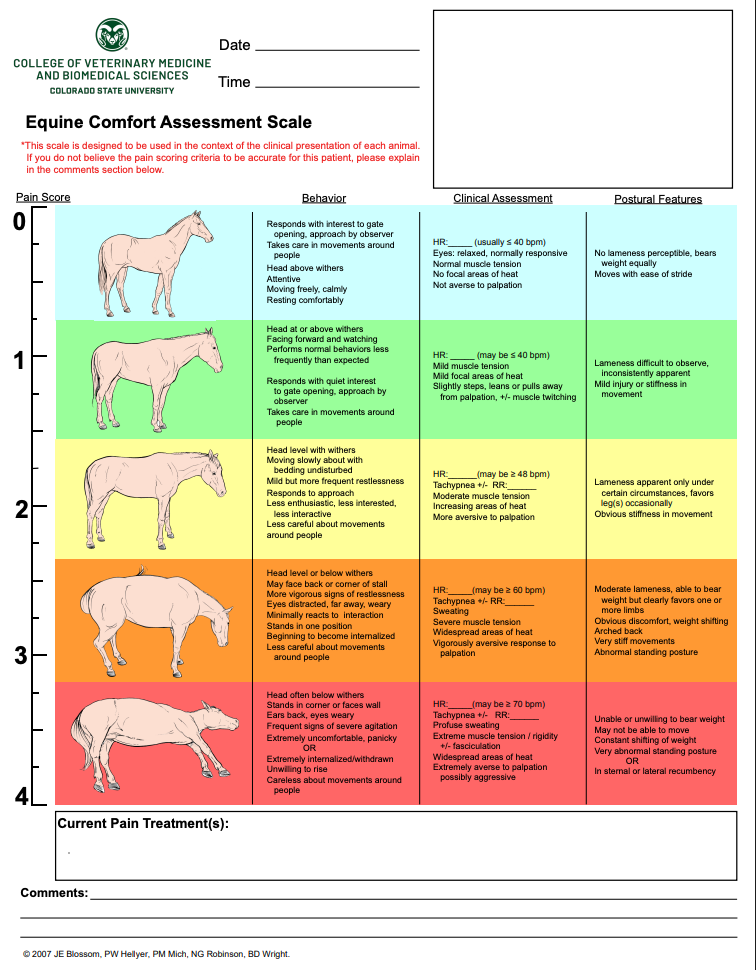
Veterinarians and caregivers use the Colorado State University Equine Pain Scale to recognize and score pain in horses more objectively.
What it measures:
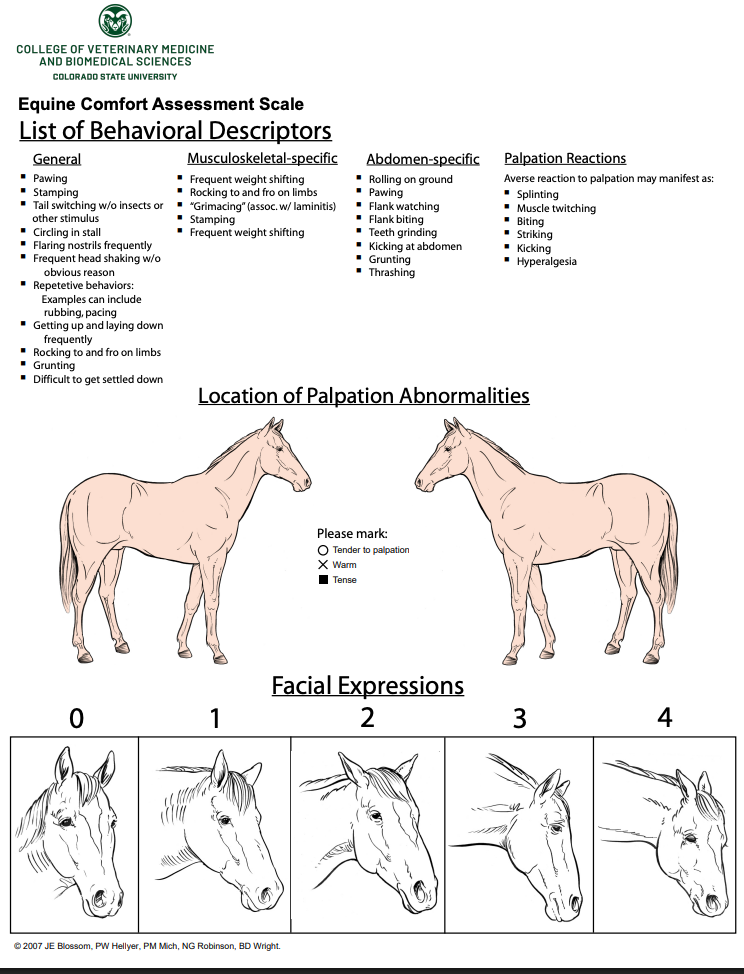
The scale emphasizes observable behaviors instead of relying on guesswork, which is particularly useful since horses often mask their pain.
Key categories include:
- Facial expression
- Ear position (pinned, stiff, or relaxed)
- Eye tension (wide, strained, or dull)
- Nostril shape and tension
- Body posture
- Weight shifting
- Abnormal stance (camped under, stretched out)
- Reluctance to move
- Behavior
- Pawing, kicking, rolling
- Restlessness or agitation
- Decreased interaction or withdrawal
- Physiological signs
- Heart rate
- Respiratory rate
- Sweating
How scoring works
Each category is scored on a numerical scale (typically 0–3):
- 0 = normal / no pain indicators
- 1 = mild changes
- 2 = moderate pain behaviors
- 3 = severe, obvious pain
The scores are added together to give an overall pain score, which helps guide:
- Whether pain management is needed
- How well treatment is working
- When intervention should escalate
Why the pain scale matters
This scale is widely respected because it:
- Improves early detection of pain
- Reduces subjectivity
- Helps ensure more humane, timely care
It’s often used in:
- Post-surgical monitoring
- Colic cases
- Lameness evaluations
- Ongoing welfare assessments in rescues and barns
Key Takeaways
- The pain assessment scale is a behavioral tool for objectively scoring pain in horses.
- It measures observable behaviors like facial expressions, ear position, and body posture.
- Each category scores from 0 (no pain) to 3 (severe pain), allowing for an overall pain assessment.
- This scale improves early pain detection, reduces subjectivity, and ensures humane care.
- It’s commonly used in post-surgical monitoring and ongoing welfare assessments.