Estimated reading time: 8 minutes
PPID and Cushing’s Disease: Two Names for the Same Condition
Pituitary pars intermedia dysfunction, commonly called equine Cushing’s disease, is a progressive hormonal disorder most often found in older horses and ponies. One serious complication connected to this condition is laminitis. Changes in the brain reduce dopamine’s control over part of the pituitary gland, causing it to produce excessive amounts of certain hormones.
PPID itself is not caused by eating grass. However, many horses with PPID also develop insulin dysregulation—an abnormal insulin response that greatly increases their risk of laminitis. A horse can also have insulin dysregulation without being overweight or showing obvious signs of PPID.
Possible signs of PPID include:
- A long, thick, curly, or patchy coat that sheds late or does not shed normally
- Loss of muscle, especially along the topline
- A sagging or pot-bellied appearance
- Unusual fat deposits above the eyes, along the neck, or near the tailhead
- Increased drinking and urination
- Excessive sweating
- Lethargy or reduced performance
- Recurring infections or slow wound healing
- Repeated hoof abscesses
- Unexplained or recurring laminitis
Some horses develop laminitis before the more familiar PPID signs become obvious. This is one reason subtle changes in an older horse should never be dismissed as “just aging.” Equine Endocrinology Group Cooler temperatures may slow pasture growth, but that does not always mean the grass is safe— especially for horses with pituitary pars intermedia dysfunction (PPID) or Cushings, insulin dysregulation, equine metabolic syndrome, or a history of laminitis.
Understanding the connection between fall grass, PPID, and laminitis can help horse owners recognize problems early and prevent a painful, potentially life-threatening emergency.
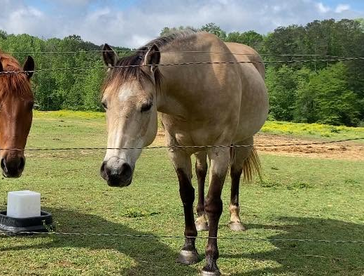
PPID horses at Bearfoot Ranch
Why Fall Grass Can Be Risky
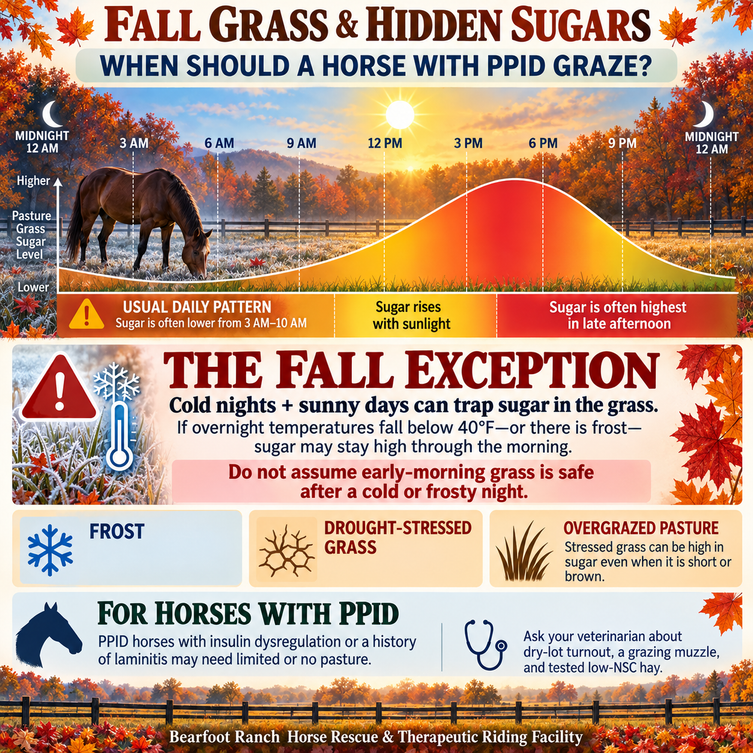
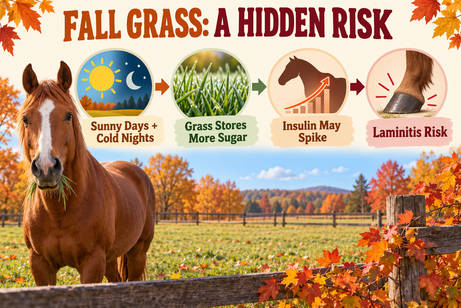
Grass uses sunlight to produce sugar for energy. When days are sunny but nights become cold, grass growth may slow while sugars continue to accumulate. Drought, frost, overgrazing, and other forms of plant stress can also affect the grass’s carbohydrate content.
When a susceptible horse eats grass containing high levels of sugar and other nonstructural carbohydrates, its insulin level may rise excessively. Prolonged or extreme hyperinsulinemia can damage the sensitive laminae that connect the hoof wall to the coffin bone, resulting in endocrinopathic laminitis.
Fall risk is especially concerning for:
- Horses or ponies with PPID
- Horses with insulin dysregulation or equine metabolic syndrome
- Overweight horses and “easy keepers”
- Horses with cresty necks or abnormal fat deposits
- Horses that have experienced laminitis previously
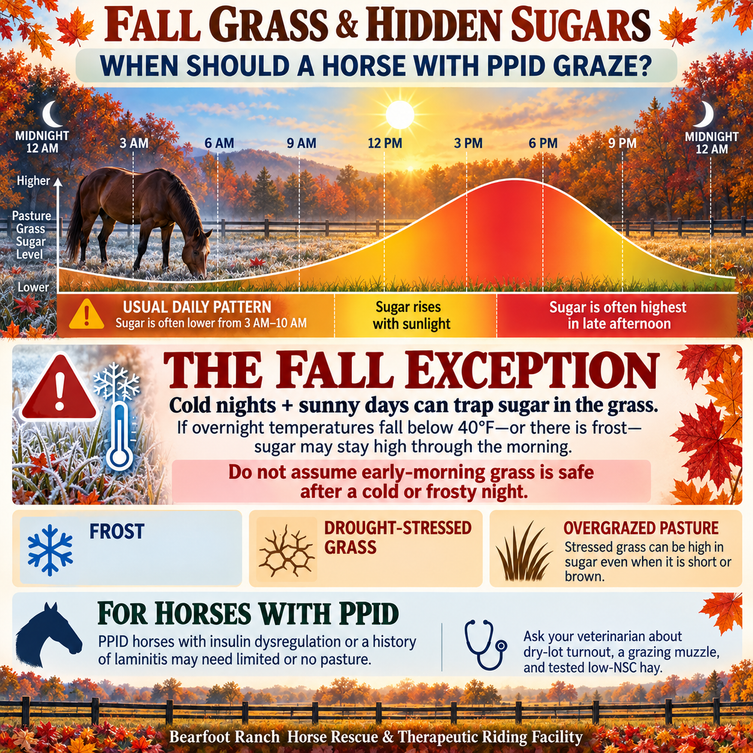
There is no universally safe grazing time for every high- risk horse. Although pasture sugars are often lower in the early morning, cold nights and stressed grass can change the pattern. For extremely sensitive horses, even limited grazing may be unsafe.
A horse wearing a grazing muzzle can safely turn out on lush pasture while reducing its grass intake by 30% to 80%
Know the Early Signs of Laminitis
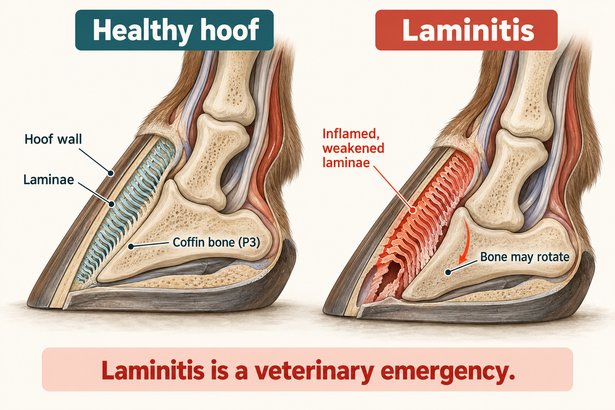
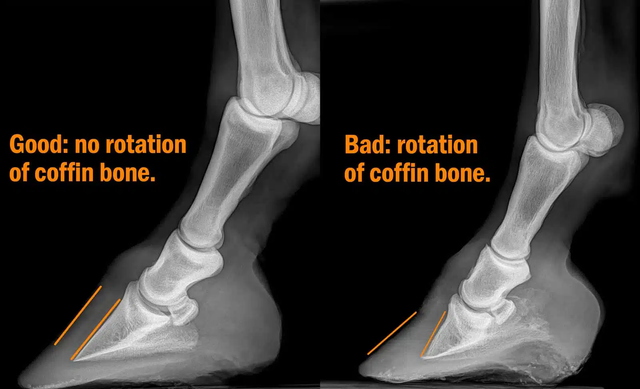
Laminitis is a painful condition inside a horse’s hoof. It damages the sensitive tissue, called laminae, that holds the hoof wall to the coffin bone. In severe cases, that connection weakens enough for the bone to rotate or sink, sometimes called founder.
Laminitis does not always begin with a dramatic “rocked-back” stance. Early symptoms may be subtle and easier to notice when turning, walking on firm ground, or picking up a foot.
Watch for:
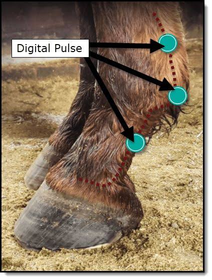
- A stronger or “bounding” digital pulse near the fetlock
- Hooves that feel unusually warm for an extended period
- A short, stiff, or choppy stride
- Hesitation when turning
- Reluctance to walk on firm or rocky ground
- Frequently shifting weight between the feet
- Standing with the front feet stretched forward
- Lying down more than usual
- Reluctance to move, rise, or pick up a foot
- Sudden unexplained lameness
- Widened hoof-growth rings or a dished hoof wall in chronic cases
Reducing the Risk
Prevention should be individualized with help from a veterinarian, farrier, and qualified equine nutrition professional.
Helpful steps include:
- Ask your veterinarian about testing older or suspicious horses for PPID and insulin dysregulation.
- Have previously diagnosed horses monitored regularly, because medication and management needs may change.
- Give pergolide or other prescribed medication exactly as directed. PPID generally requires lifelong management.
- Do not change medication doses without consulting the veterinarian.
- Monitor body condition, neck crest, topline, drinking habits, coat changes, and hoof comfort.
- Check digital pulses regularly so you know what is normal for each horse.
- Restrict or eliminate pasture access when conditions are risky.
- Use a properly fitted grazing muzzle if grazing is approved.
- Provide a dry lot or grass-free turnout area for high-risk horses.
- Feed hay appropriate for the horse’s metabolic needs. Hay testing is the best way to know its sugar and starch content.
- Avoid grain, sweet feed, sugary treats, and unnecessary high-carbohydrate supplements.
- Make all feed and pasture changes gradually.
- Maintain a healthy weight through a veterinarian-approved diet and exercise plan.
- Schedule consistent farrier care so hoof changes can be recognized early.
- Exercise can help improve insulin regulation in a sound horse, but a horse that is footsore or experiencing laminitis should never be exercised until the veterinarian says it is safe.
Laminitis commonly affects both front feet, but it can involve any foot. A horse may also appear only mildly sore while serious damage is beginning inside the hoof.
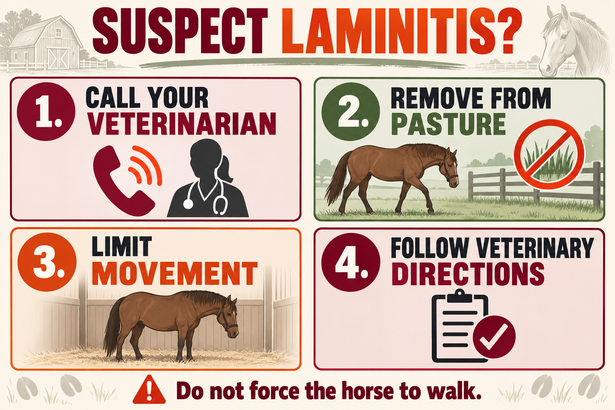
What to Do If You Suspect Laminitis
Treat suspected laminitis as an emergency.
- Call your veterinarian immediately. Early treatment offers the best chance of limiting damage.
- Remove the horse from pasture and stop grain, sweet feed, and sugary treats.
- Provide water, but ask the veterinarian what forage should be offered.
- Confine the horse to a small area or deeply bedded stall to reduce movement and support the feet.
- Do not force the horse to walk, exercise, or “walk it out.” Movement can worsen damage to the laminae.
- Do not trailer the horse unless the veterinarian instructs you to do so.
- Follow veterinary directions regarding icing, pain medication, foot support, radiographs, diet, and blood testing. Do not give medication merely to mask the pain without professional guidance.
Early Attention Can Make a Difference
Fall grass may look sparse or harmless, but it can still contain enough sugar to trigger dangerous insulin responses in susceptible horses.
Careful pasture management, regular veterinary testing, proper nutrition, and close observation of the horse’s feet can prevent a small warning sign from becoming a devastating emergency.
Know your horse’s normal behavior, stride, digital pulse, and hoof temperature. When something does not look or feel right, act quickly.
With PPID and laminitis, waiting to see if the horse improves can allow additional damage to occur. The veterinarian may recommend radiographs and work closely with the farrier to support the foot and monitor the position of the coffin bone. Testing for PPID and insulin dysregulation may also be needed to identify the underlying cause and reduce the chance of another episode.
Key Takeaways
- PPID, or equine Cushing’s disease, increases the risk of laminitis in susceptible horses, often due to insulin dysregulation.
- Fall grasses can accumulate high sugar levels, posing a risk for horses with PPID or metabolic syndrome.
- Recognizing early signs of laminitis is crucial; subtle changes may indicate serious hoof issues.
- Prevention includes regular testing, medication management, and monitoring of horses’ conditions and feeding.
- Immediate action is essential if laminitis is suspected; contact a veterinarian to prevent serious damage.