
Estimated reading time: 6 minutes
As the summer sun hits its peak, we all feel the intensity of the heat—and our horses are no different. While horses are resilient creatures, their ability to regulate their own body temperature can be easily overwhelmed by high temperatures and stifling humidity. As a horse owner, understanding the difference between heat stress and heat stroke is not just a matter of comfort; it is a critical skill for ensuring your horse’s safety.
Heat Stress vs Heat Stroke
While terms are often used interchangeably, it’s important to distinguish between the two levels of thermal distress:
- Heat Stress (Heat Exhaustion): This occurs when a horse’s natural cooling mechanisms—primarily sweating—are unable to keep up with the heat being generated or absorbed. The body is struggling, and if it doesn’t get relief, it can quickly escalate.
- Heat Stroke: This is a true medical emergency. It happens when the body temperature rises so rapidly that the internal regulation system fails entirely. This can lead to rapid organ failure, collapse, and, if not treated immediately, death.
Know the Warning Signs
Being observant is your first line of defense. Keep a close eye on your horses, especially those at higher risk, such as seniors, horses that are overweight, those with dark coats, or horses in active training.
Watch for these red flags:
- Sweating Issues: Excessive sweating, or in the most alarming cases, a complete cessation of sweating (anhidrosis).
- Vital Signs: Rapid, labored breathing and an elevated heart rate.
- Behavioral Changes: Lethargy, depression, an anxious demeanor, or a clear reluctance to move.
- Physical Indicators: Dark or “tacky” gums, muscle tremors, stumbling, or general weakness.
- Body Temperature: If you suspect trouble, check their temperature; a reading consistently above 104°F is a major cause for concern.
Heat Stress Prevention: The Foundation of Summer Safety
The best treatment for heat-related illness is prevention. Ensure your barn and pasture management prioritize these essentials:
- Fresh Water: Ensure constant access to clean, cool water.
- Strategic Shade: Always provide access to high-quality shelter to escape direct sunlight.
- Airflow: Proper ventilation in stalls is vital; use fans to keep air moving during stagnant, hot days.
- Electrolytes: Speak with your vet about supplementation to replace what is lost through sweat.
- Common Sense Scheduling: Adjust workloads and allow for ample rest breaks during the hottest parts of the day.
What to Do in an Emergency
If you suspect your horse is suffering from heat stroke, time is your greatest enemy. Follow these immediate first-aid steps while contacting your veterinarian:
- Move to Safety: Get the horse into deep shade or a well-ventilated, cool area immediately.
- Active Cooling: Reach for the water hose. Focus on cooling the large muscle groups and areas where major blood vessels are near the surface.
- Encourage Airflow: Use fans or natural breezes to accelerate the cooling process.
- Hydration: Offer fresh, cool water for the horse to drink.
Never wait to see if an overheated horse “just needs a minute.” Early recognition and rapid, decisive action can save your horse’s life. Stay vigilant, keep them cool, and let’s make sure every horse at Bearfoot Ranch has a safe and comfortable summer!
Equine “Real Feel”: Protecting Your Horse from Heat Stress
As horse owners and riders, we are always mindful of the weather, but it is crucial to remember that our horses experience the heat differently than we do. Prioritizing horse heat stress prevention is essential during the warmer months, as our equine partners are highly susceptible to rising temperatures. Just as humans look at a “Real Feel” or “Heat Index” to understand the true impact of the weather, we must use the Equine Heat Index to keep our horses safe and healthy throughout the summer.
Because horses generate a significant amount of internal metabolic heat, they are highly susceptible to heat stress. Understanding how current conditions affect their physiology is the first step in responsible horsemanship.
Calculating the Equine Heat Index
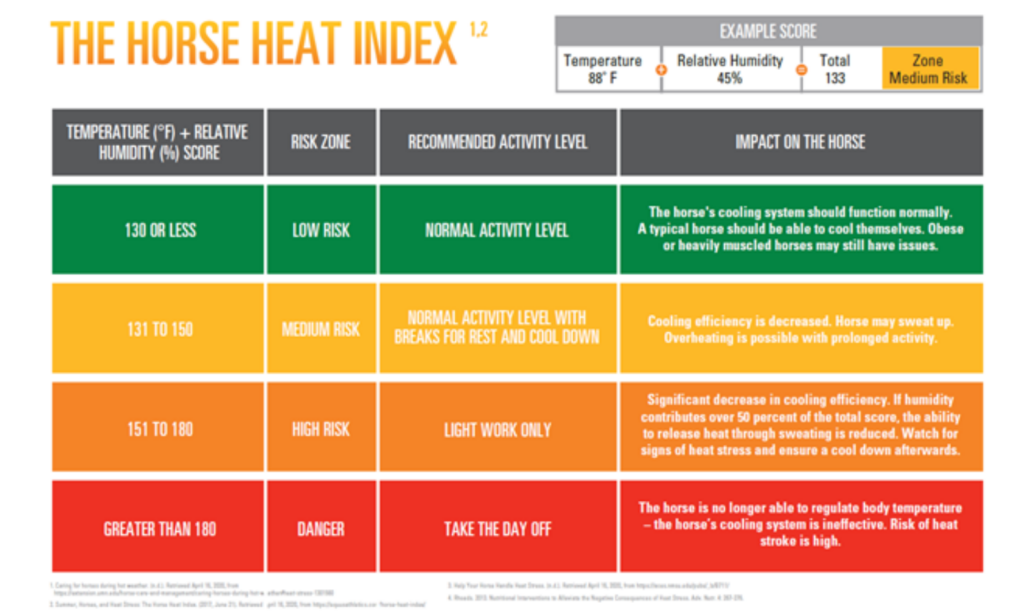
Determining your horse’s “real feel” is straightforward. Simply add the air temperature (in Fahrenheit) to the current relative humidity percentage.
Temperature (°F)+Relative Humidity (%)=Equine Heat Index
For example, if it is 88°F with 45% humidity, your total score is 133, placing your horse in the “Medium Risk” category.
Understanding the Risk Zones
Knowing your score is only half the battle. Use the following guide to adjust your training and turnout schedules to ensure your horse stays comfortable and safe:
- 130 or Less (Low Risk): Your horse’s cooling system should be working effectively. Normal activity and exercise levels are generally safe, though it is always wise to keep an eye on obese or heavily muscled horses who may struggle more in the heat.
- 131 to 150 (Medium Risk): Cooling efficiency begins to drop. If you choose to ride or work your horse, ensure you incorporate frequent breaks for rest and cooling. Keep a close watch for signs of fatigue.
- 151 to 180 (High Risk): At this level, the risk of overheating is significant. If humidity contributes to more than 50% of your total score, your horse’s ability to release heat through sweat is greatly reduced. Limit exercise to light work only and prioritize thorough cool-downs.
- Greater than 180 (Danger): This is a critical threshold. A horse’s cooling system is no longer effective, putting them at high risk for heat stroke. The best course of action is to give your horse the day off.
Prioritize Your Horse’s Well-Being
Summer heat can be challenging, but by being proactive with the Equine Heat Index, you can make informed decisions that protect your equine partner. Always observe your horse for signs of distress, ensure they have access to fresh water and shade, and never hesitate to prioritize their safety over a planned training session.
Do you have questions about managing your horse’s health this summer? Reach out to our team at Bearfoot Ranch for guidance and support.
Key Takeaways
- Heat stress differs from heat stroke: heat stress can escalate to a serious condition, while heat stroke is life-threatening.
- Look for warning signs of heat issues, such as excessive sweating, rapid breathing, and lethargy.
- Prevent heat stress by providing fresh water, shade, ventilation, and adjusting workloads during hot weather.
- Use the Equine Heat Index to assess risk and ensure your horse stays comfortable and safe during summer.
- Always prioritize your horse’s well-being and act quickly if you suspect they are overheating.