
Estimated reading time: 5 minutes
Tiny pests, Big problems
Spring is here, and with it comes the tiny but pesky guests we all want to avoid… ticks! Common ticks can pose health risks for both animals and people. At Bearfoot Ranch, keeping our horses happy, healthy, and tick-free is high priority. From safe pasture routines to gentle grooming checks, we’re sharing tips to protect our four-legged family this season.
Common Ticks You’ll Encounter in North Georgia
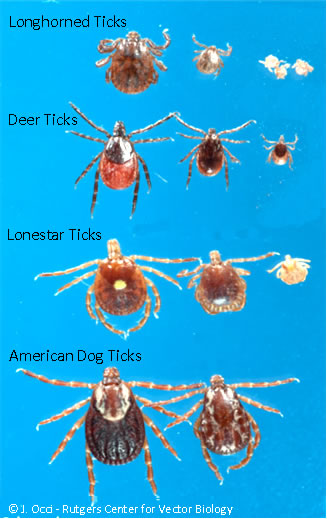
While these aren’t all horse‑specific, these tick types bite large animals (and people) in Georgia:
Asian Longhorned Tick – an invasive species now found in parts of North Georgia that can occur in large numbers on livestock.
- Black‑legged (Deer) – vector of Lyme disease and anaplasmosis; risk increases the longer the tick is attached.
- Lone Star Tick – the most common tick in Georgia; aggressive biter and can transmit ehrlichiosis and other illnesses.
American Dog Tick – second most common; can carry Rocky Mountain spotted fever.
🐴 Risks to Horses
Ticks on horses can:
- Cause skin irritation and itching, leading to sores and potential secondary infection.
- Transmit diseases (some overlap with human tick‑borne illnesses).
- In rare cases, ticks can cause tick paralysis in horses (though uncommon).
- Heavy infestations can contribute to anemia and general irritation.
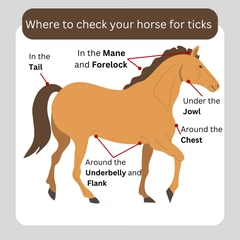
🪶 Where Ticks Hide on Horses
- Ticks often attach in warm, hidden areas such as:
- Near nostrils or around the chest and abdomen folds
- Inside the ears
- Under the jaw and mane
- In the groin and under the tail
Equine Tick Diseases:
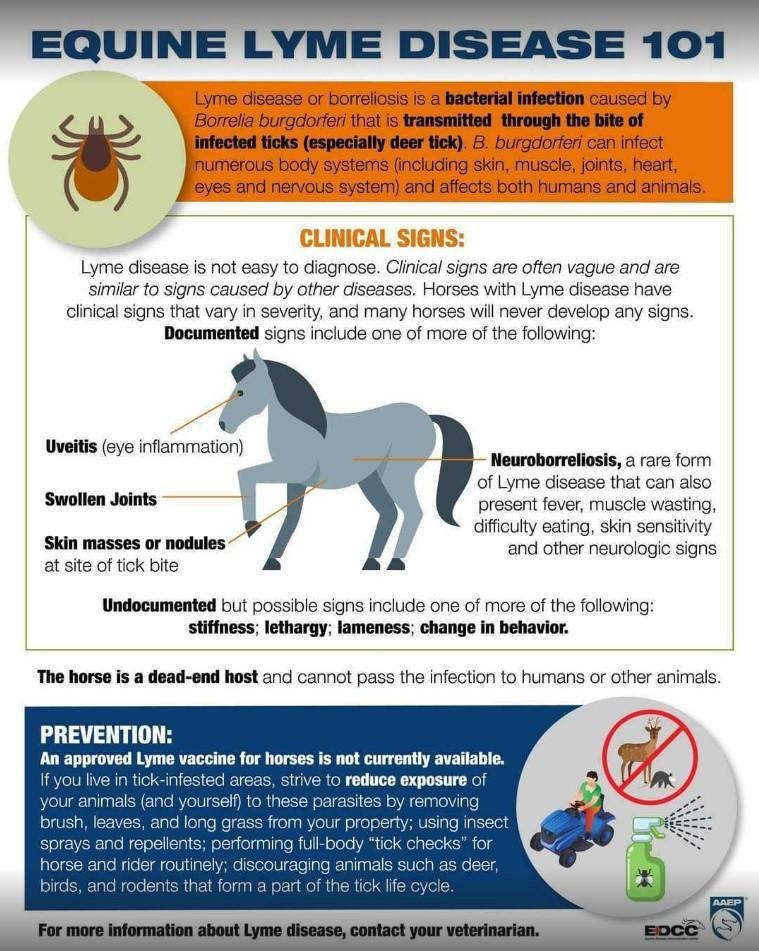
🦠 Lyme Disease
Common signs in horses:
- Stiffness or shifting lameness
- Sensitivity to touch
- Behavioral changes
- Weight loss
- Low-grade fever (sometimes)
Treatment:
- Long-term antibiotics
🦠 Ehrlichiosis
Common signs in horses :
- Fever
- Diarrhea (can be severe)
- Depression
- Laminitis risk
Treatment:
- Oxytetracycline antibiotic
🦠 Anaplasmosis
(Equine Granulocytic Anaplasmosis)
Common signs in horses:
- Fever (often first sign)
- Lethargy and depression
- Swelling in legs (stocking up)
- Ataxia (uncoordinated movement)
- Pale or yellowish gums
- Loss of appetite
Treatment:
Oxytetracycline IV antibiotic
🧰 How to Remove Ticks from Horses
- Wear gloves
- Use fine‑tipped tweezers or a tick‑removal tool
- Grasp the tick close to the skin and pull straight outward with steady pressure
- Avoid twisting, crushing, or squeezing — this can leave mouthparts behind or increase
disease risk - Dispose of the tick properly (e.g., sealed in alcohol or trash)
🐴 Horse‑Specific Seasonal Notes
- Horses with thick coats or heavy feathering can hide ticks more easily — so daily grooming and checks are critical year‑round.
- Tick larvae and nymphs are very small in spring/early summer and easier to miss — pay special attention to ears and under the mane during these months.
- Severe infestations can occur quickly — consult your vet if you ever see unusually high numbers on one animal.
The Lone Star Tick
The Lone Star tick is the most common tick found in North Georgia.
Identified by a single white spot on the adult female’s back. Adult males are brown with faint markings.
They are highly aggressive and often cluster on the chest, belly, and under the tail of horses.
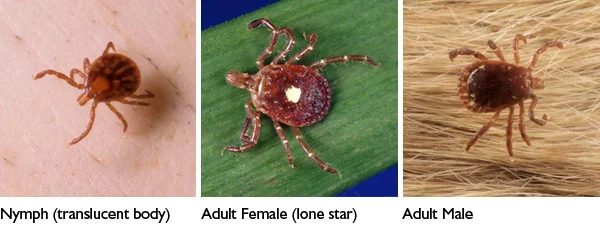
Adult Female (Unfed): Approximately 1/8 inch. You could fit about 5 or 6 side-by-side across the diameter of a dime.
Adult Female (Unfed): Approximately 1/8 inch. You could fit about 5 or 6 side-by-side across the diameter of a dime.
Adult Male: Smaller than the female, typically less than 1/10 to 1/5 inch.
🌿 Prevention
(especially important in Georgia)
- Daily tick checks (mane, tail, under jaw, between legs)
- Use equine-safe fly/tick repellents
- Keep pastures mowed and reduce brush
- Limit exposure to wooded edges where ticks thrive
- Consider barn/pasture management to reduce wildlife (deer)
⚠️ When to call your vet
- Fever + lethargy
- Sudden swelling in legs
- Neurological signs (stumbling, unsteady)
- Diarrhea with fever
🐴 Horse‑Specific Seasonal Notes
- Horses with thick coats or heavy feathering can hide ticks more easily — so daily grooming and checks are critical year‑round.
- Tick larvae and nymphs are very small in spring/early summer and easier to miss — pay special attention to ears and under the mane during these months.
- Severe infestations can occur quickly — consult your vet if you ever see unusually high numbers on one animal.
